
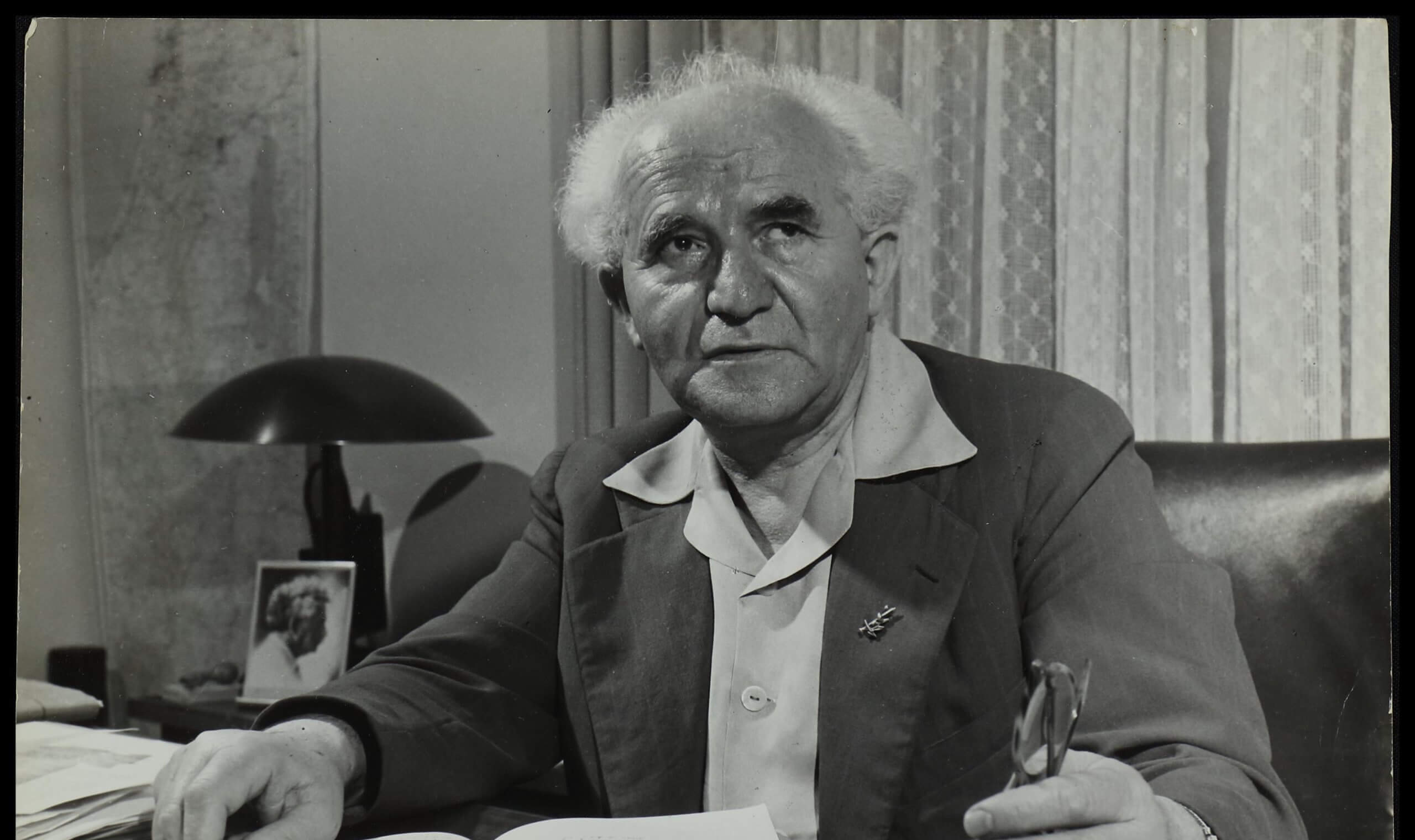
The exhibition "comes to light" shakes the dust of Ben Gurion clothing for the first time and uses them to narrate the spaces of the house. The term "to change hats" expresses a change of role or point of view. The clothes are represents differnet landmarks in Ben Gurion's personal-public biography.
From a humble tembel hat to a tuxedo top hat (one of the two!), every shift in David Ben-Gurion’s path and role in life was reflected in a deliberate change of dress and appearance.
The Hasidic kapoteh he wore as a child in Plonsk gave way to student attire in Warsaw; the student’s clothes were replaced by those of a Russian revolutionary; the pioneer’s outfit by that of a Turkish law student.
Moving through the rooms of the house, the exhibition presents life-sized figures dressed in the original garments of the man who shaped the state during its formative years, revealing how clothing functions simultaneously as an outward marker and a deeply personal tool for defining and declaring identity at pivotal moments of life.
The exhibition is based on David Ben-Gurion’s personal clothing collection, unveiled to the general public for the first time following the “Passover Order.”
Clothing touches both ends of the human experience — the private body and the social order/
Aesthetic preferences and choices simultaneously reveal personal inclinations and the values and identities we hold.
From a tuxedo to iconic ATA workwear, the private wardrobe of the man who shaped the State of Israel in its early years brings David Ben-Gurion vividly to life — a towering leader in size-40 shoes.
Every change in Ben-Gurion’s path and role in life was reflected in the adoption of a different style of dress and appearance.
The Hasidic kapoteh he wore as a child in Plonsk gave way to student attire in Warsaw; the student’s clothes were replaced by those of a Russian revolutionary; and the pioneer’s outfit by that of a Turkish law student.
This exhibition presents Ben-Gurion’s private wardrobe. Through fabrics and cuts, it reveals the many facets of his character, and demonstrates how clothing serves both as an external marker of role and as a personal tool for defining life transitions and identity.
The exhibition comprises seven scenes and garment installations interwoven throughout the rooms of the house, intertwining David Ben-Gurion’s personal story with the public narrative of his leadership.
The exhibition invites personal identification on one hand, while raising broader questions on the other about the role of a leader and the significance of clothing in shaping and expressing that role.
Wandering through the exhibition offers an experience of glimpse, discovery, and revelation.

